
MAYFLOWER 1867–1880
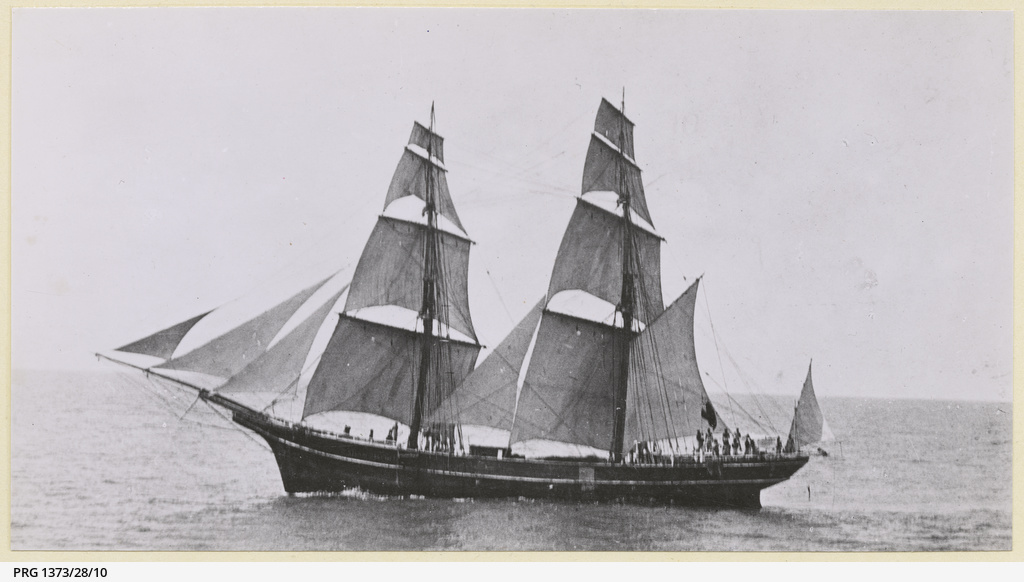
Brig Dersingham, c. 1865, AD Edwards Collection, State Library of South Australia, PRG-1373-28-10
Description
Brig; one deck and a round stern
Construction
Wood; copper fastened and sheathed with felt and yellow metal
Size
Length: 33.50 m Beam: 8.10 m Draft: 4.90 m Tonnage: 227.00 gross
Built
W Pickersgill, Sunderland, UK
Owner
Five joint owners, Adelaide
Sunk
15 July 1880
Location
Approx. 300 m offshore, 10 m from the seaward side of the southern section of Deere Reef, Augusta, some 750 m north of Barrack Point
Latitude/Longitude
(-34.333102, 115.171923)
Sinking
The Mayflower was anchored in Flinders Bay when it was hit by squalls and rain. At 1.15 am the heavy ground swell caused the vessel to touch the bottom. The crew managed to bring the head to the east to get the port anchor down. At daylight a kedge anchor was put down. By 7 am the Mayflower was bumping on the bottom again. An hour later the vessel started to sustain damage, including the unshipping of the rudder. The port anchor cable parted. There was 30 cm of water in the pump well, which doubled over the next hour. By 2 pm the Mayflower was abandoned. Captain Walker was found guilty of negligence by anchoring too close to the shore; his certificate was suspended for six months.
Underwater
The Mayflower lies on a sandy bottom, with the main axis lying north–south. The site consists of iron deck supports, bronze bolts, timber, some unidentified ironwork and, at the southern end, the remains of the windlass with two sets of stud-link chain leading southwards.
Gallery