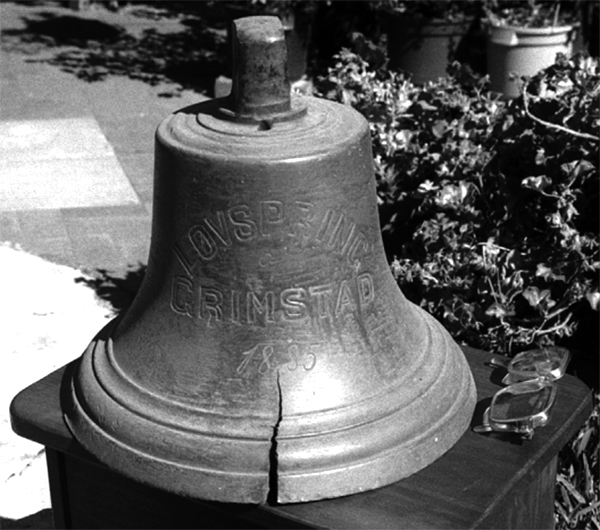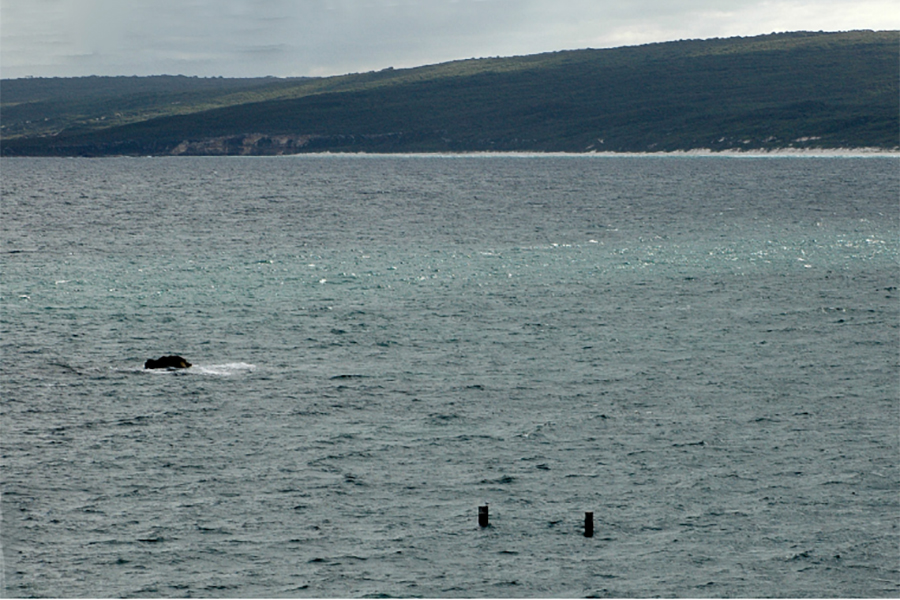
The Lövspring was a Norwegian barque built by N.O. Gjömle, having one deck, two tiers of beams and was sheathed with yellow metal. It was owned by J. Jörgensen, and had arrived at Hamelin Bay from Madagascar in June. Also in the harbour at that time were the barques Katinka and Nor’wester. All these vessels were there to load timber from Maurice Coleman Davies’ sawmill, and all the cargoes were insured with the Commercial Union Assurance Company. The barque Arcadia was also at anchor awaiting repairs after having previously been stranded. The Lövspring was under the command of C. Sand, with a crew of nine
: LØVSPRING (1866–1900)
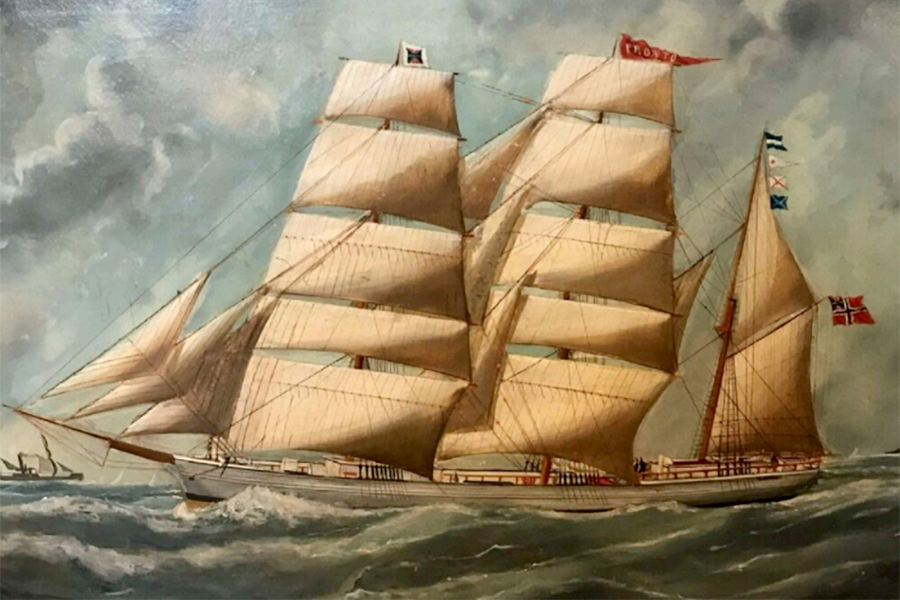
A typical Norwegian Barque under sail
Description
A wooden three-masted barque. It was a typical Scandinavian-owned timber carrier of the late 19th century
Construction
Timber
Size
Tons: 502 gross Length: 41.58 m Beam: 9.5 m Draft: 5.15 m
Built
Built in 1873 by N.O. Gjomle at Christiansand, Norway.
Owner
: J. Jorgensen. Master: O. Hasen
Sunk
July 22, 1900
Location
Mushroom Rock, Hamelin Bay
Latitude/Longitude
(-34.2182529, 115.0179175)
Sinking
One of the most severe storms to hit the SouthWest occurred in July 1900. This storm occasioned much damage and caused the loss of three vessels and the stranding of a fourth in Hamelin Bay. There were two phases to the storm—the first phase with winds from the north-north-west on 22 July, and a second phase when winds swung round to the south-west the following day. The Lövspring survived the first phase but was blown from the jetty during the second phase. The Lövspring was moored to the north side of the Hamelin Jetty when the severe storm struck from the north-north-west. The barque was being pounded and ‘trying to jump on top of the jetty and smashing herself to pieces’ (McGregor, G.F., letter to McGregor, W., 1 August 1900). The wind then swung round and blew with equal ferocity from the south-west. The bow hawser on the barque snapped and the Lövspring was driven onto Mushroom Rock. It struck heavily and then slid off to sink in water deep enough to cover the hull, leaving only the top of the bulwarks and the spars and rigging above water. The captain and crew clung to the rigging during the night. The following morning, with the wind slightly abating, they managed to launch a boat and pull to the jetty. This boat was later used in the rescue of survivors from the wreck of the Katinka.
Underwater
Very Little of the wreck remains?
Gallery