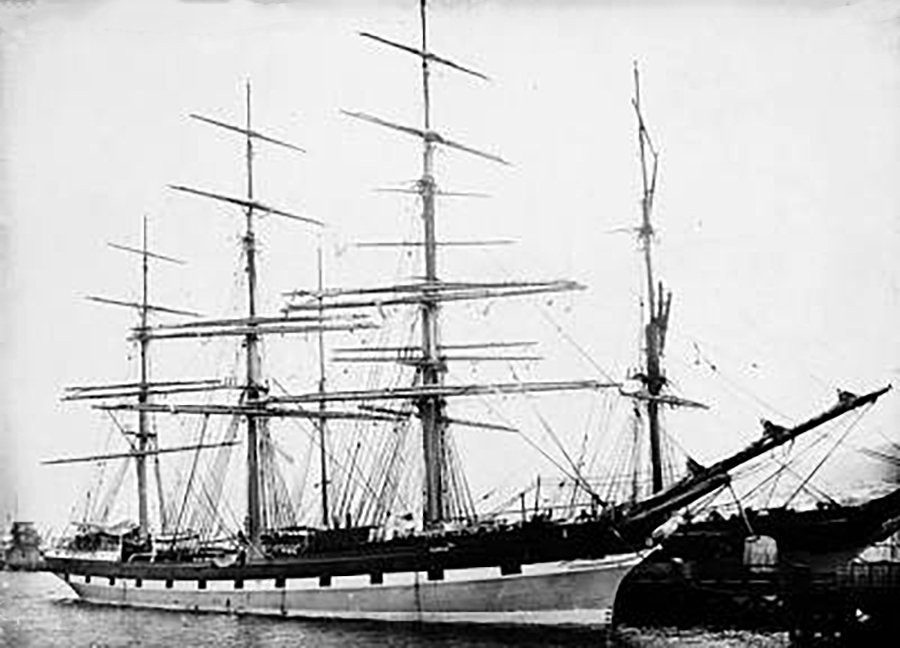
A wooden-hulled three-masted Barque. It featured a raised quarterdeck (approx. 12.5m long) and was copper-fastened and sheathed with felt and yellow metal to protect the hull.
The Chaudiere spent its early career under British ownership, including a stint with the famous Shaw, Savill & Co. line. In early 1883, it was purchased in either Adelaide or Melbourne by Maurice Coleman Davies, who intended to use the barque exclusively for his expanding timber empire in Australia’s southwest.
Description
Three-masted Barque
Construction
Timber with yellow metal sheafing
Size
611 tonnes length 41m beam 8.9m draft 5.0m
Built
1863 by W. Doxford at Sunderland, England.
Owner
H. & W. Douglas of London. Later owned by Shaw, Savill & Co. (1879). At the time of loss in 1883, she was owned by Maurice Coleman Davies, Timber merchant
Location
Hamelin Bay, Western Australia; approximately 300m off the beach and 650m north of the old Hamelin Jetty.
Latitude/Longitude
(−34.216417, 115.031950)
Sinking
The Chaudiere had been anchored in Hamelin Bay for nearly two months, awaiting repairs to its pumps and loading a cargo of timber sleepers. On the night of July 3, 1883, a severe winter gale shifted to the north-northwest. Despite the crew paying out extra cable on both anchors, the vessel began to drag toward the shore. By the morning of July 4, the ship went hard aground in approximately 5 meters of water. As the storm intensified, the hull was battered by the surf, and Captain William Hayes ordered the crew to abandon the vessel. No lives were lost.
Underwater
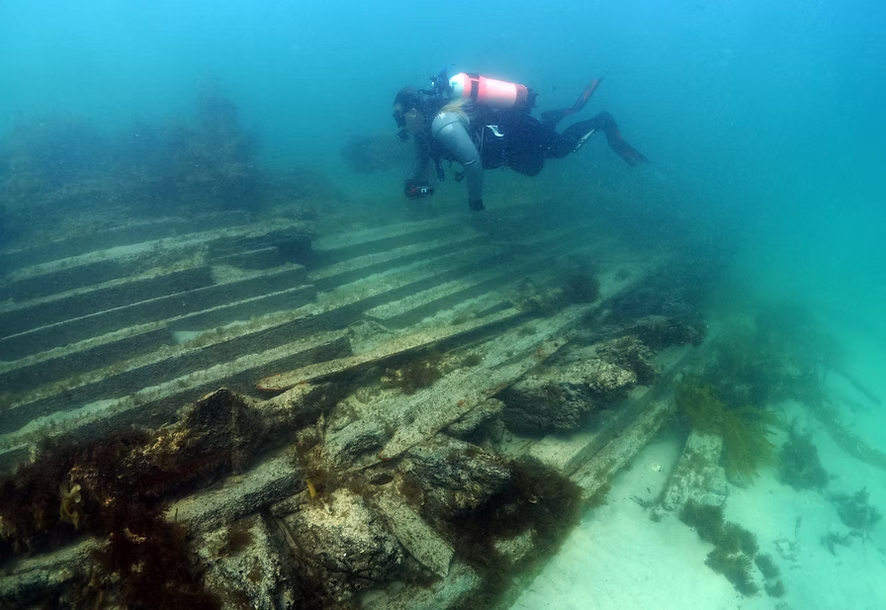
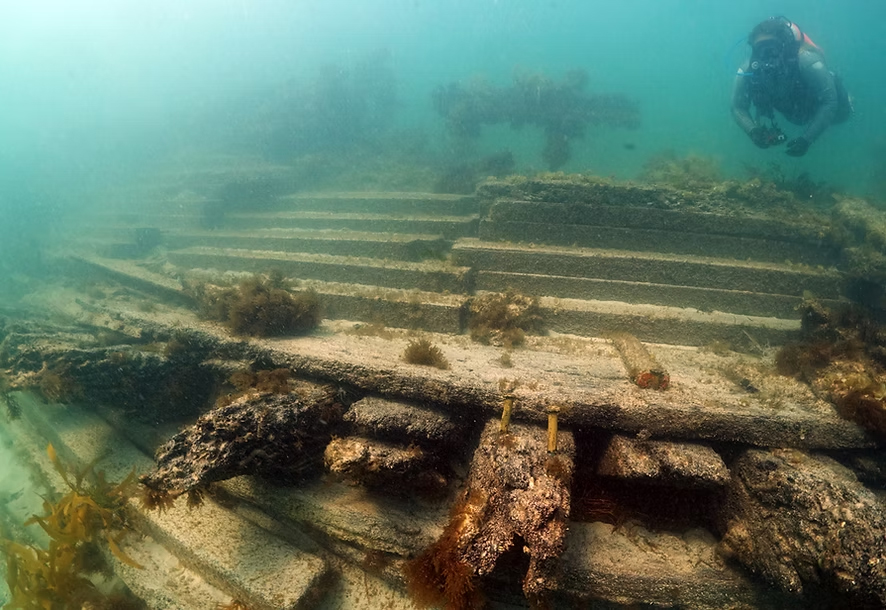
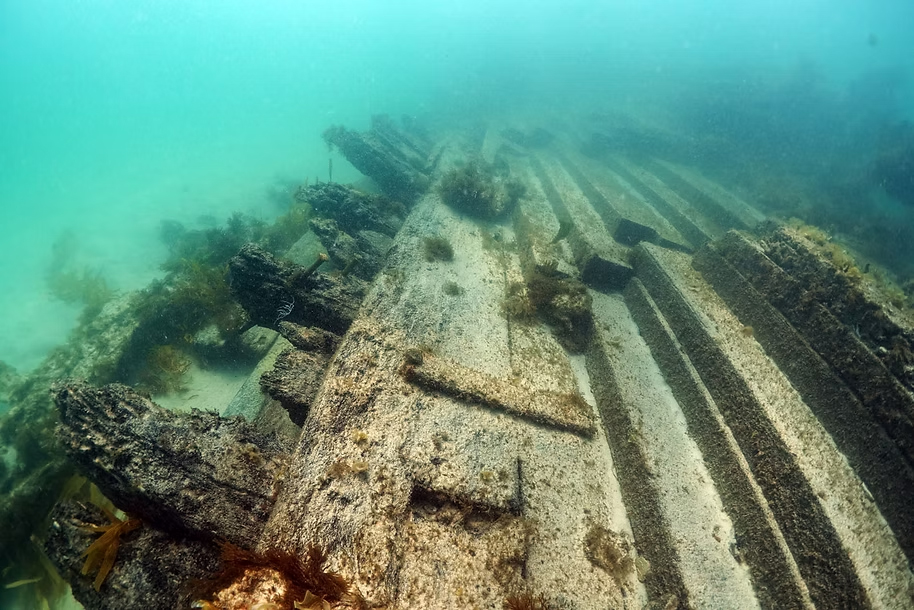
The wreck lies in 5–6 meters of water on a sandy bottom. The site measures roughly 35.5m by 8.5m. Divers can see the wooden hull frames (paired), sections of planking, and a jumble of deck beams. Notably, the cargo of neatly stacked timber sleepers is still visible in the center of the site, alongside copper nails and hull sheathing.