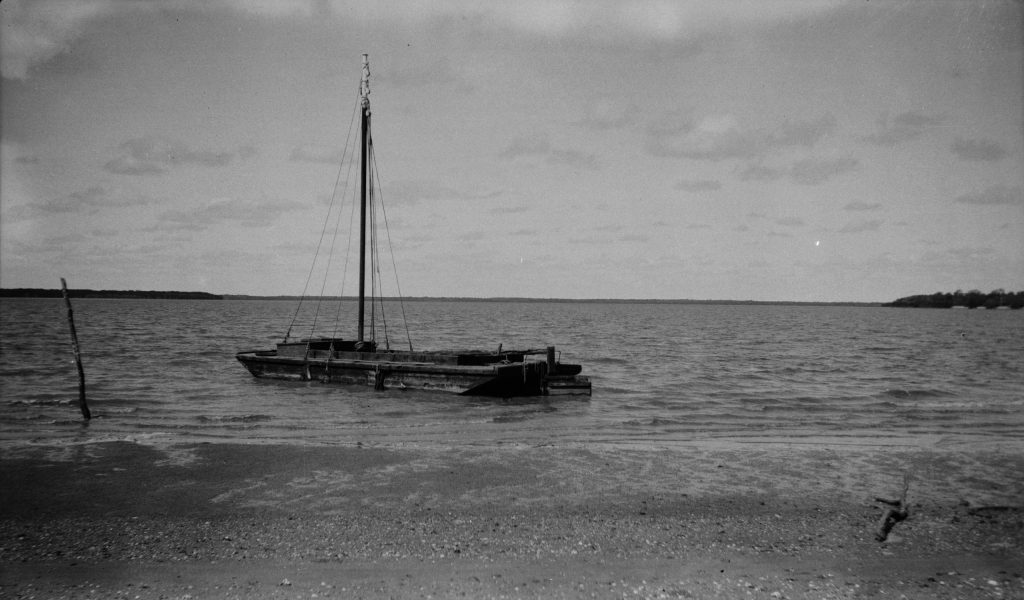
CAMEL 1861–1926
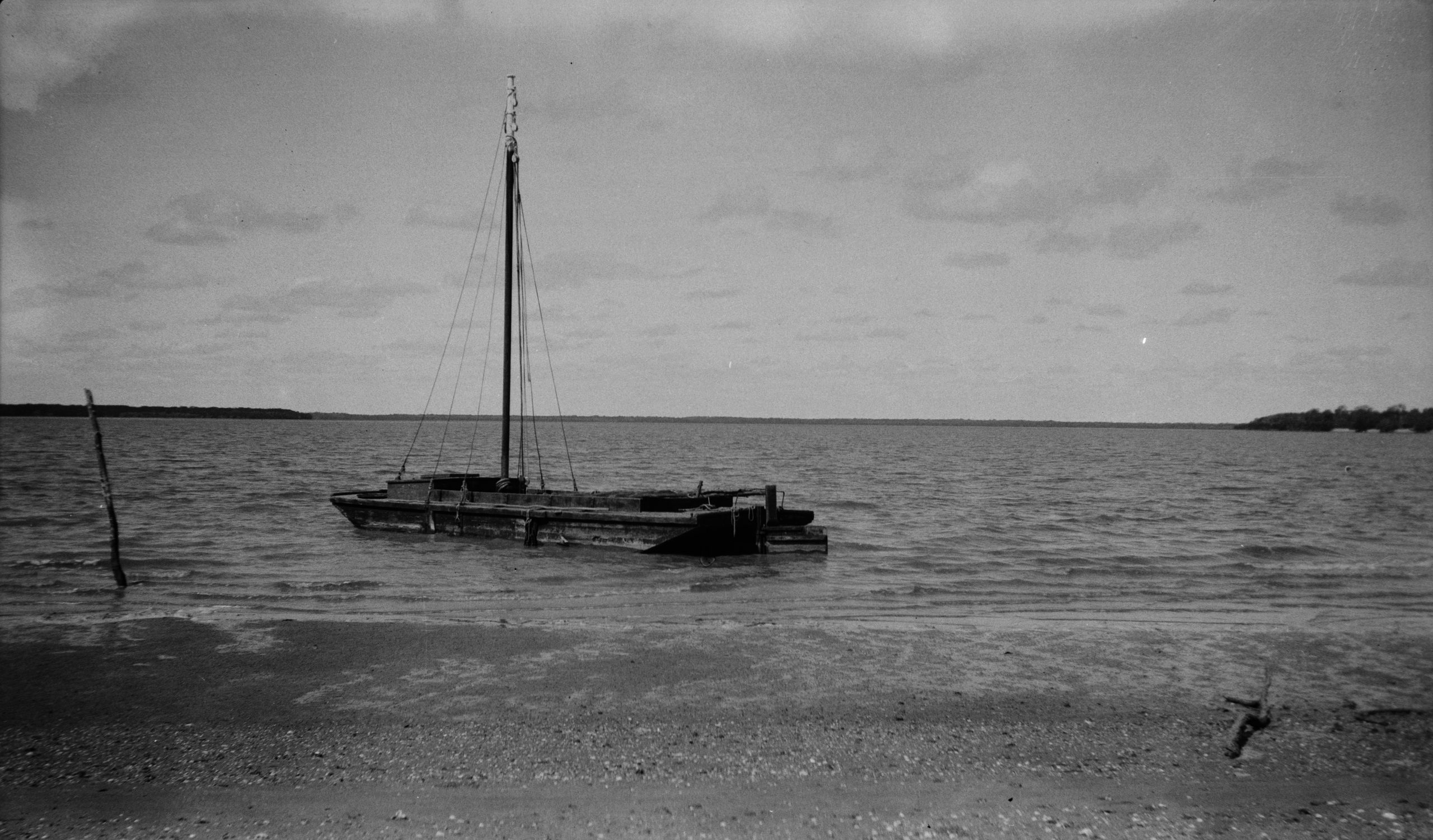
Sailing barge, Mansbridge, CA St George, photographer, Brisbane John Oxley Library, State Library of Queensland, 29873-0002-0025
Description
Sailing lighter, with one mast, a round stern and five bulkheads
Construction
Wood. The hold was lined with Muntz metal to make it waterproof.
Size
Length: 86.2 ft (26.27 m) Beam: 21.8 ft (6.65 m) Depth: 11. 3 ft (3.44 m) Tonnage: 135.79 gross, 129.9 net
Built
W & G White, Williamstown, Victoria
Owner
Various owners; last owners were Alex Armstrong & George Waters, Albany, or James Ball, lighterman
Sunk
1926
Location
The Camel lies 75 m from the shore in water only 1–1.5 m deep in Oyster Harbour, south-south-east of Green Island, Albany.
Latitude/Longitude
(-34.995068, 117.95708)
Sinking
The Camel was used to carry water to ships anchored offshore, first in Melbourne, and in Albany from 1897. In 1907 it was converted into a barge. The Camel was driven ashore in a gale in 1921 and seriously damaged. It was holed above the waterline a year later in another gale. The Camel was later towed into Oyster Harbour and abandoned. It was accidentally set on fire during a party in 1926 and burned to the waterline.
Underwater
(2019) The site is mostly exposed to the keelson level with some floors buried. The wreck sits on a patch of sand surrounded by seagrass. The lack of seagrass immediately around the Camel may be due to the biotoxic effect of the Muntz metal used to line the Camel’s hold. Remnants of loose copper sheathing were observed; also iron knees, wooden floors and frames, and the keel with iron bolts. The site appears to be in a stable condition, though active corrosion was noted on one iron knee.
Gallery